Economics of Digital Platforms
A chapter-based set of notes on digital-platform economics, organized around the course session flow: network effects and scale, platform design and monetization, trust, customer economics, and regulation.
These notes are intentionally not a compressed summary. They preserve the session structure and extend it with more explanation, more connective tissue across sessions, and additional diagrams to make the material easier to study like a handbook.
Chapter Guide
- Network Effects and Economies of Scale
- Designing Digital Platforms
- Trust in Online Markets
- Customer Value, Acquisition, and Marketing ROI
- Regulation and Public Policy
- Strategy Synthesis
What These Notes Cover
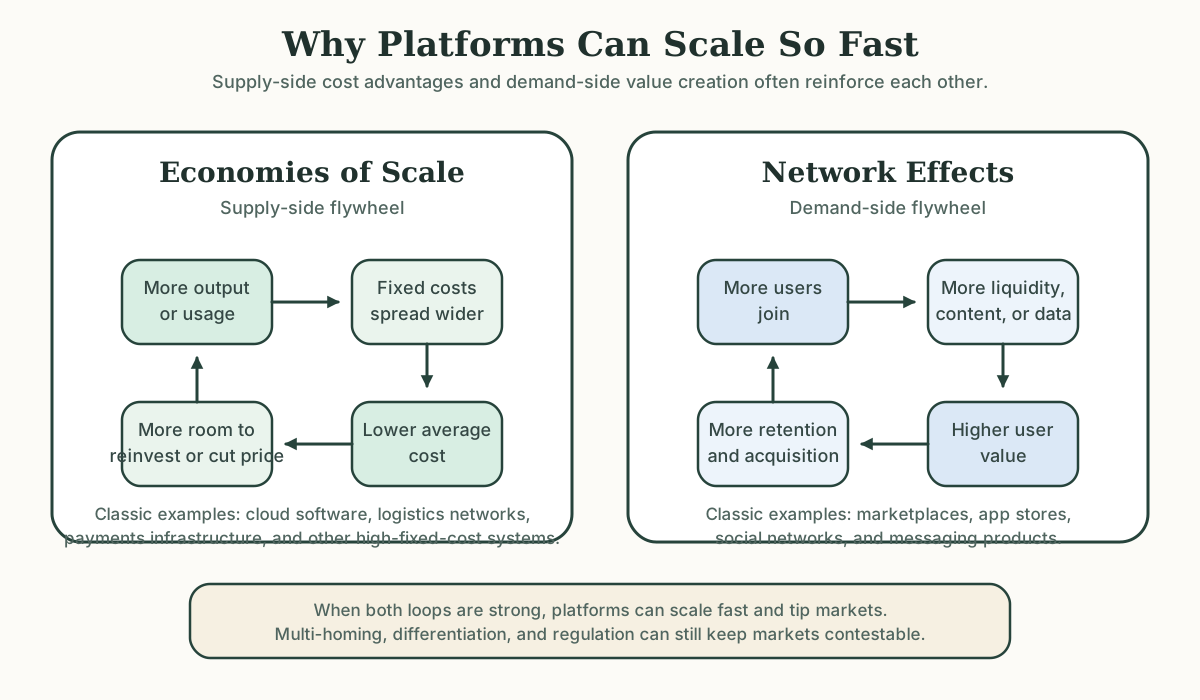
- when scale economies matter and when network effects matter more
- how direct and indirect network effects change platform design
- why pricing on one side of a market is often really a participation decision
- how freemium, advertising, take rates, and value-added services fit together
- why trust, reputation, and enforcement are part of the economic model rather than add-on operations
- how CLV, CAC, incrementality, and experimentation should be interpreted in platform settings
- how privacy, antitrust, consumer protection, and neutrality debates shape platform strategy
How To Use These Notes
- If you want the conceptual core first, start with Chapters 1 and 2.
- If you care most about marketplaces and reputation systems, go straight to Chapter 3.
- If your work is closer to growth, marketing, or experimentation, Chapter 4 is the fastest path.
- If your focus is regulation, public policy, or platform governance, Chapter 5 stands on its own.
- Chapter 6 ties the sessions together into one operating framework.
Source Basis
These notes are based on the course sessions on economics of digital platforms. The writing here keeps the session-specific concepts and examples intact while expanding the explanation around them.